Saturday, May 28, 2016

Musee d'Orsay


The Musée d'Orsay (French pronunciation: ​[myze dɔʁsɛ]) is a museum in Paris, France, on the left bank of the Seine. It is housed in the former Gare d'Orsay, a Beaux-Arts railway station built between 1898 and 1900. The museum holds mainly French art dating from 1848 to 1914, including paintings, sculptures, furniture, and photography. It houses the largest collection of impressionist and post-Impressionist masterpieces in the world, by painters including Monet, Manet, Degas, Renoir, Cézanne, Seurat, Sisley, Gauguin andVan Gogh. Many of these works were held at the Galerie nationale du Jeu de Paume prior to the museum's opening in 1986. It is one of the largest art museums in Europe.

What I See

  • I see lots of glass/Je vois beaucoup de verre
  • I see lots of cameras/ Je vois beaucoup de camera
  • I see tourist with families/ Je vois touristique avec les famillies
  • I see sculptures/ je vois des sculpture 
  • It looks like a railroad station/ Il ressemble a une station de chemin de fer.

Magret de Canard
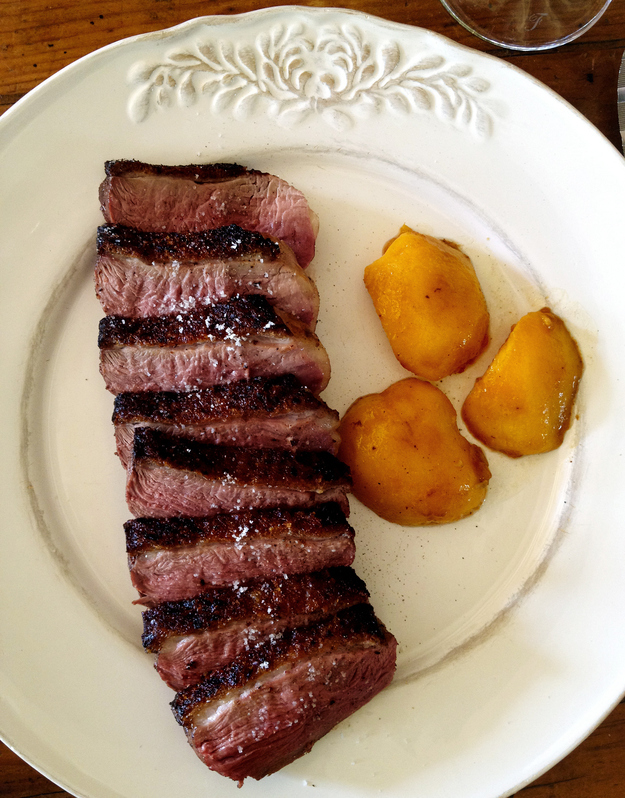
Magret de Canard

Gateau Basque

Gâteau Basque


Palais Garnier

The Palais Garnier (pronounced: [palɛ ɡaʁnje] French About this sound  ) is a 1,979-seat opera house, which was built from 1861 to 1875 for the Paris Opera. It was originally called the Salle des Capucines, because of its location on the Boulevard des Capucines in the 9th arrondissement of Paris, but soon became known as the Palais Garnier, in recognition of its opulence and its architect, Charles Garnier. The theatre is also often referred to as the Opéra Garnier (French About this sound  ) and historically was known as the Opéra de Paris or simply the Opéra,[7] as it was the primary home of the Paris Opera and its associated Paris Opera Ballet until 1989, when the Opéra Bastille opened at the Place de la Bastille.[8] The Paris Opera now mainly uses the Palais Garnier for ballet.
The Palais Garnier has been called "probably the most famous opera house in the world, a symbol of Paris like Notre Dame Cathedral, the Louvre, or the Sacré Coeur Basilica."[9] This is at least partly due to its use as the setting for Gaston Leroux's 1910 novel The Phantom of the Opera and, especially, the novel's subsequent adaptations in films and Andrew Lloyd Webber's popular 1986 musical.[9] Another contributing factor is that among the buildings constructed in Paris during theSecond Empire, besides being the most expensive,[10] it has been described as the only one that is "unquestionably a masterpiece of the first rank."[11] This opinion is far from unanimous however: the 20th-century French architect Le Corbusieronce described it as "a lying art" and contended that the "Garnier movement is a décor of the grave".[12]
The Palais Garnier also houses the Bibliothèque-Musée de l'Opéra de Paris (Paris Opera Library-Museum). Although the Library-Museum is no longer managed by the Opera and is part of the Bibliothèque nationale de France,[13] the museum is included in unaccompanied tours of the Palais Garnier.[14]

What I See
  • I see lots of chandeliers/ Je vois beaucoup de lustres
  • I see lots of stairs/ Je vois beaucoup d'escaliers
  • I see lots of seats/ Je vois beaucoup de sieges
  • I see a singer/ Je vois un chanteur
  • I see ballet dancers/ Je vois danseurs de ballet

Sole meuniere


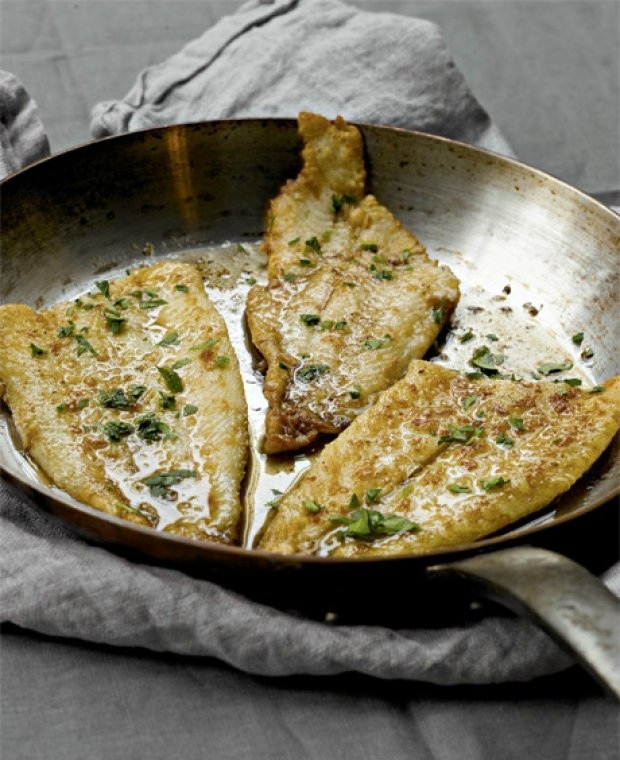
Sole Meunière


Eclair au Chocolat


Eclair au chocolat

Thursday, May 19, 2016

Les Catacombs de Paris


The Catacombs of Paris (French: Catacombes de Paris, About this sound  ) are underground ossuaries in Paris, France which hold the remains of over six million people[1] in a small part of the ancient Mines of Paris tunnel network. Located south of the former city gate "Barrière d’Enfer" (Gate of Hell) beneath Rue de la Tombe-Issoire, the ossuary was founded when city officials were faced with two simultaneous problems: a series of cave-ins starting in 1774 and overflowing cemeteries, particularly Saint Innocents. Nightly processions of bones from 1786 to 1788 transferred remains from cemeteries to the reinforced tunnels, and more remains were added in later years. The underground cemetery became a tourist attraction on a small scale from the early 19th century, and has been open to the public on a regular basis since 1874 with surface access from a building at Place Denfert-Rochereau.


The Catacombs are among the 14 City of Paris Museums managed by Paris Musées since January 1, 2013. The catacombs are formally known as l'Ossuaire Municipal or Catacombes officiels and have been called "The World's Largest Grave" due the number of individuals buried.[2] Although the ossuary covers only a small section of the underground "les carrières de Paris" ("the quarries of Paris"), Parisians today often refer to the entire tunnel network as "the catacombs".
What I saw
  • I see skulls/ Je vois des cranes
  • I see lots of tourist/ Je vois beaucoup de touristes
  • I see lots of altars/ Je vois beaucoup d'autels
  • I see a long tunnel/ Je vois un long tunnel
  • I see dirt floor/ je vois sol en terre battue

Bouef Bourguignon


Creme Brulee

Image result for Crème brûlée.


Thursday, May 12, 2016

Sainte-Chapelle

The Sainte-Chapelle (French pronunciation: ​[sɛ̃t ʃapɛl], Holy Chapel) is a royal chapel in the Gothic style, within the medievalPalais de la Cité, the residence of the Kings of France until the 14th century, on the Île de la Cité in the heart of Paris, France.
Begun some time after 1238 and consecrated on 26 April 1248,[2] the Sainte-Chapelle is considered among the highest achievements of the Rayonnant period of Gothic architecture. It was commissioned by King Louis IX of France to house his collection of Passion relics, including Christ's Crown of Thorns—one of the most important relics in medieval Christendom.
Along with the Conciergerie, the Sainte-Chapelle is one of the earliest surviving buildings of the Capetian royal palace on the Île de la Cité. Although damaged during the French Revolution, and restored in the 19th century, it has one of the most extensive 13th-century stained glass collection anywhere in the world.

5 things that you can see

  • Stained glass: vitrail
  • Cross:traverser
  • Rows of seats:des rangées de sièges
  • Gargoyles: gargouilles

  • Stone Statues:Une statue en pierre


Jai mange une Croque Madame.


Image result for french desserts names
Je mange lemon macarons.

Tuesday, May 10, 2016

Jardin du luxembour


The Jardin du Luxembourg, or the Luxembourg Garden, located in the6th arrondissement of Paris, was created beginning in 1612 by Marie de' Medici, the widow of King Henry IV of France, for a new residence she constructed, the Luxembourg Palace. The garden today is owned by theFrench Senate, which meets in the Palace. It covers 23 hectares and is known for its lawns, tree-lined promenades, flowerbeds, the model sailboats on its circular basin, and for the picturesque Medici Fountain, built in 1620.[1]
  • I see red flowers= je vois des fleurs rouges
  • I see yellow flowers= je vois des fleurs jaune
  • i see orange flowers= je vois des fleurs orange
  • i see lots of people talking= je vois beacoup de gens parler
  • i see a party= je vois une fete


Image result for quiche
Je mange une quiche


Image result for crepes
Je mange une crepe