Tuesday, May 10, 2016

Sacre-Coeur

The Basilica of the Sacred Heart of Paris, commonly known as Sacré-Cœur Basilica and often simply Sacré-Cœur (French: Basilique du Sacré-Cœur, pronounced [sakʁe kœʁ]), is a Roman Catholic church and minor basilica, dedicated to the Sacred Heart of Jesus, in Paris, France. A popular landmark, the basilica is located at the summit of the butte Montmartre, the highest point in the city. Sacré-Cœur is a double monument, political and cultural, both a national penance for the defeat of France in the 1871 Franco-Prussian War and the socialistParis Commune of 1871[1] crowning its most rebellious neighborhood, and an embodiment of conservative moral order, publicly dedicated to the Sacred Heart of Jesus, which was an increasingly popular vision of a loving and sympathetic Christ.[2]
The Sacré-Cœur Basilica was designed by Paul Abadie. Construction began in 1875 and was finished in 1914. It was consecrated after the end of World War I in 1919.

Basilique of the Sacré Cœur[edit]


In the moment of inertia following the resignation of the government of
 Adolphe Thiers, 24 May 1873, François Pie, bishop of Poitiers, expressed the national yearning for spiritual renewal— "the hour of the Church has come"—[9] that would be expressed through the "Government of Moral Order" of the Third Republic, which linked Catholic institutions with secular ones, in "a project of religious and national renewal, the main features of which were the restoration of monarchy and the defense of Rome within a cultural framework of official piety",[10] of which Sacré-Cœur is the chief lasting triumphalist[11]monument.
Though today the Basilica is asserted
[5][when?] to be dedicated in honor of the 58,000 who lost their lives during the war, the decree of the Assemblée nationale, 24 July 1873, responding to a request by the archbishop of Paris by voting its construction, specifies that it is to "expiate the crimes of the Commune".[6] Montmartre had been the site of the Commune's first insurrection, and the Communards had executed Georges Darboy, Archbishop of Paris, who became a martyr for the resurgent Catholic Church. His successor Guibert, climbing the Butte Montmartre in October 1872, was reported to have had a vision, as clouds dispersed over the panorama: "It is here, it is here where the martyrs are,[7] it is here that the Sacred Heart must reign so that it can beckon all to come".[8]The inspiration for Sacré Cœur's design originated on September 4, 1870, the day of the proclamation of the Third Republic, with a speech by Bishop Fournier attributing the defeat of French troops during the Franco-Prussian War to a divine punishment after "a century of moral decline" since theFrench Revolution, in the wake of the division in French society that arose in the decades following that revolution, between devout Catholics and legitimist royalists on one side,[3] and democrats, secularists, socialists and radicals on the other. This schism in the French social order became particularly pronounced after the 1870 withdrawal of the French military garrison protecting the Vatican in Rome to the front of the Franco-Prussian War by Napoleon III,[4]the secular uprising of the Paris Commune of 1870-1871, and the subsequent 1871 defeat of France in the Franco-Prussian War.
The decree voting its construction as a "matter of public utility", 24 July,[12] followed close on Thiers' resignation. The project was expressed by the Church as a National Vow (Voeu national) and financial support came from parishes throughout France. The dedicatory inscription records the Basilica as the accomplishment of a vow by Alexandre Legentil and Hubert Rohault de Fleury, ratified by Joseph-Hippolyte Guibert, Archbishop of Paris. The project took many years to complete.


  • I see three domes on top of a dome= Je vois trois dômes au-dessus d'un dôme
  •  


Arc de Triomphe

"Arc de Triomphe" redirects here. For the horse race in Paris, see Prix de l'Arc de Triomphe. For other uses, see Arch of Triumph.


The Arc de Triomphe de l'Étoile (French pronunciation: [aʁk də tʁijɔ̃f də letwal], Triumphal Arch of the Star) is one of the most famous monuments in Paris. It stands in the centre of the Place Charles de Gaulle (originally named Place de l'Étoile), at the western end of the Champs-Élysées.[3] It should not be confused with a smaller arch, the Arc de Triomphe du Carrousel, which stands west of the Louvre. The Arc de Triomphe honours those who fought and died for France in the French Revolutionary and the Napoleonic Wars, with the names of all French victories and generals inscribed on its inner and outer surfaces. Beneath its vault lies the Tomb of the Unknown Soldier from World War I.
The Arc de Triomphe is the linchpin of the Axe historique (historic axis) – a sequence of monuments and grand thoroughfares on a route which runs from the courtyard of the Louvre to the Grande Arche de la Défense. The monument was designed by Jean Chalgrin in 1806 and its iconographic program pits heroically nude French youths against bearded Germanic warriors in chain mail. It set the tone for public monuments with triumphant patriotic messages.
The monument stands 50 metres (164 ft) in height, 45 m (148 ft) wide and 22 m (72 ft) deep. The large vault is 29.19 m (95.8 ft) high and 14.62 m (48.0 ft) wide. The small vault is 18.68 m (61.3 ft) high and 8.44 m (27.7 ft) wide. Its design was inspired by the Roman Arch of Titus. The Arc de Triomphe is built on such a large scale that, three weeks after the Paris victory parade in 1919 (marking the end of hostilities in World War I), Charles Godefroy flew his Nieuport biplane through it, with the event captured on newsreel.[4][5][6]
It was the tallest triumphal arch in existence until the completion of the Monumento a la Revolución in Mexico City in 1938, which is 67 metres (220 ft) high. The Arch of Triumph in Pyongyang, completed in 1982, is modelled on the Arc de Triomphe and is slightly taller at 60 m (197 ft).


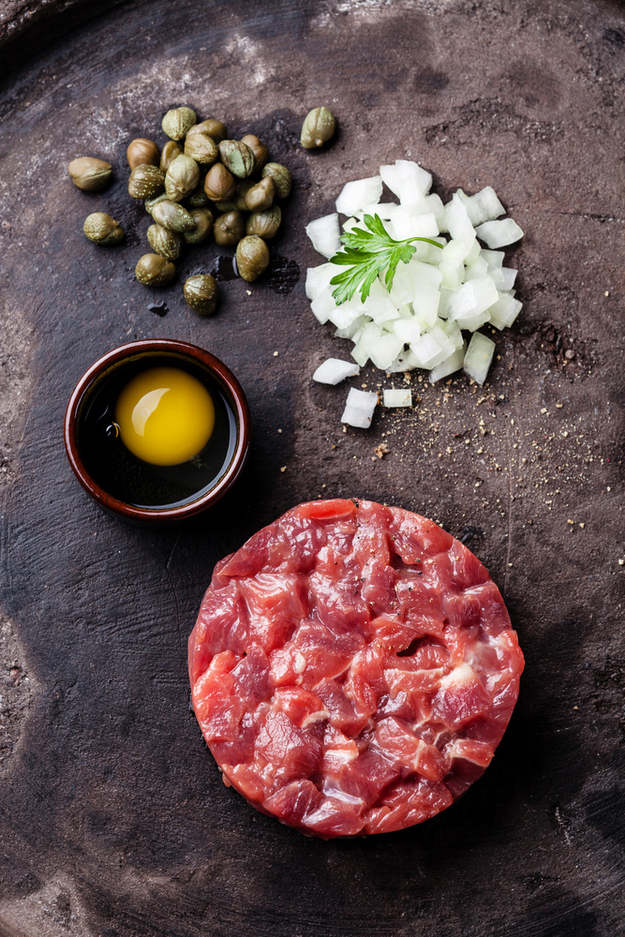
Steak Tartare


Steak Tartare

Cla Foutis

Thursday, May 5, 2016

Notre Dame

Notre-Dame de Paris (IPA: [nɔtʁə dam də paʁi](French About this sound  ) ; French for "Our Lady of Paris"), also known as Notre-Dame Cathedral or simply Notre-Dame, is a medieval Catholic cathedral on the eastern half of the Île de la Cité in the fourth arrondissement of Paris, France.[3] The cathedral is widely considered to be one of the finest examples of French Gothic architecture, and it is among the largest and most well-known church buildings in the world. The naturalism of its sculptures and stained glass are in contrast with earlier Romanesque architecture.
As the cathedral of the Archdiocese of Paris, Notre-Dame is the parish that contains the cathedra, or official chair, of the Archbishop of Paris, currentlyCardinal André Vingt-Trois.[4] The cathedral treasury is notable for its reliquarywhich houses some of Catholicism's most important first-class relics including the purported Crown of Thorns, a fragment of the True Cross, and one of theHoly Nails.
In the 1790s, Notre-Dame suffered desecration during the radical phase of theFrench Revolution when much of its religious imagery was damaged or destroyed. An extensive restoration supervised by Eugène Viollet-le-Duc began in 1845. A project of further restoration and maintenance began in 1991.


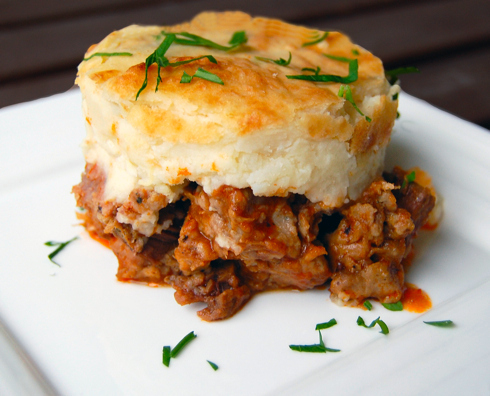
Hachis Parmentier


Hachis Parmentier


Tarte Tatin


Image result for tarte tatin


Thursday, April 21, 2016

La Louvre

Louvre

From Wikipedia, the free encyclopedia
This article is about the Louvre Museum. For the building, see Louvre Palace. For other uses, see Louvre (disambiguation).

The museum is housed in the 
Louvre Palace, originally built as a fortress in the late 12th century under Philip II. Remnants of the fortress are visible in the basement of the museum. The building was extended many times to form the present Louvre Palace. In 1682, Louis XIV chose the Palace of Versailles for his household, leaving the Louvre primarily as a place to display the royal collection, including, from 1692, a collection of ancient Greek and Roman sculpture.[2] In 1692, the building was occupied by the Académie des Inscriptions et Belles Lettres and the Académie Royale de Peinture et de Sculpture, which in 1699 held the first of a series of salons. The Académie remained at the Louvre for 100 years.[3] During the French Revolution, the National Assembly decreed that the Louvre should be used as a museum to display the nation's masterpieces.The Louvre or the Louvre Museum (French: Musée du Louvre, pronounced: [myze dy luvʁ]) (French About this sound  ) is one of the world's largest museums and a historic monument in Paris, France. A central landmark of the city, it is located on the Right Bank of the Seine in the 1st arrondissement (ward). Nearly 35,000 objects from prehistory to the 21st century are exhibited over an area of 60,600 square metres (652,300 square feet). The Louvre is the world's most visited museum, receiving more than 9.26 million visitors in 2014.[1] It is also one of the largest.
The museum opened on 10 August 1793 with an exhibition of 537 paintings, the majority of the works being royal and confiscated church property. Because of structural problems with the building, the museum was closed in 1796 until 1801. The collection was increased under Napoleon and the museum renamed the Musée Napoléon, but after Napoleon's abdication many works seized by his armies were returned to their original owners. The collection was further increased during the reigns of Louis XVIII and Charles X, and during the Second French Empire the museum gained 20,000 pieces. Holdings have grown steadily through donations and bequests since the Third Republic. The collection is divided among eight curatorial departments: Egyptian Antiquities; Near Eastern Antiquities; Greek,Etruscan and Roman Antiquities; Islamic Art; Sculpture; Decorative Arts; Paintings; Prints and Drawings.
The Louvre is the world’s most-attended museum in 2015.


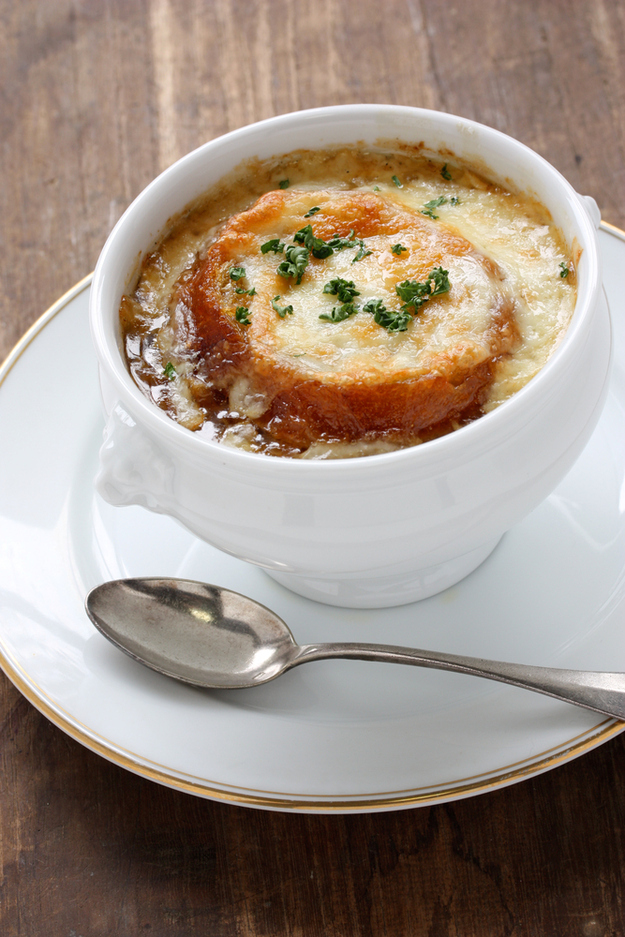
Soupe a l'oignon

Soupe à L'oignon


Eiffel Tower


Eiffel Tower

From Wikipedia, the free encyclopedia
For other uses, see Eiffel Tower (disambiguation).The Eiffel Tower (/ˈaɪfəl ˈtaʊər/ eye-fəl towr; French: Tour Eiffel French pronunciation: ​[tuʁ‿ɛfɛl] About this sound listen) is a wrought ironlattice tower on the Champ de Mars in Paris, France. It is named after the engineer Gustave Eiffel, whose company designed and built the tower.
Constructed in 1889 as the entrance to the 1889 World's Fair, it was initially criticized by some of France's leading artists and intellectuals for its design, but it has become a global cultural icon of France and one of the most recognisable structures in the world.[3] The Eiffel Tower is the most-visited paid monument in the world; 6.91 million people ascended it in 2015.
The tower is 324 metres (1,063 ft) tall, about the same height as an 81-storey building, and the tallest structure in Paris. Its base is square, measuring 125 metres (410 ft) on each side. During its construction, the Eiffel Tower surpassed the Washington Monument to become the tallest man-made structure in the world, a title it held for 41 years until the Chrysler Building in New York City was finished in 1930. Due to the addition of a broadcasting aerial at the top of the tower in 1957, it is now taller than the Chrysler Building by 5.2 metres (17 ft). Excluding transmitters, the Eiffel Tower is the second-tallest structure in France after the Millau Viaduct.


The tower has three levels for visitors, with restaurants on the first and second levels. The top level's upper platform is 276 m (906 ft) above the ground – the highest observation deck accessible to the public in the European Union. Tickets can be purchased to ascend by stairs or lift (elevator) to the first and second levels. The climb from ground level to the first level is over 300 steps, as is the climb from the first level to the second. Although there is a staircase to the top level, it is usually only accessible by lift.